Have you ever been stuck in an airport, flight canceled, frantically trying to get your travel insurance provider on the phone? That human voice on the other end of the line can feel like a lifeline.
It’s a moment where you need empathy, understanding, and quick, clear help. But what if the next time you call, you’re not talking to a person at all?
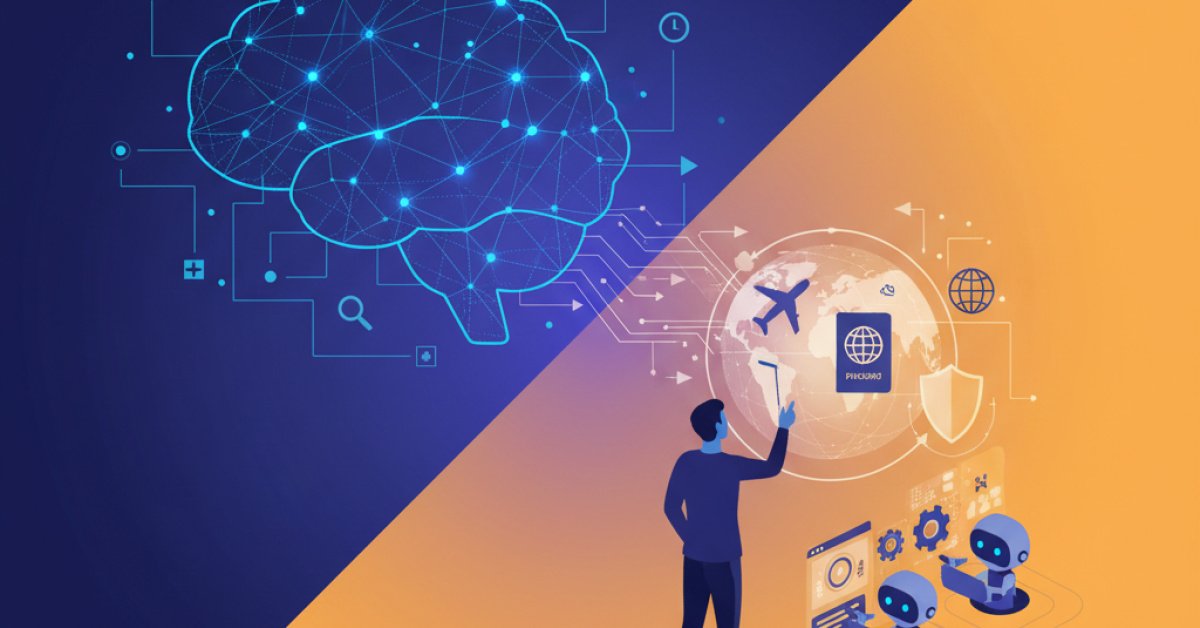
That's a question that’s becoming very real, very fast. And it looks like one of the biggest names in insurance, Allianz, is getting ready to tackle it head-on. Word on the street is that the company is in talks about potential job cuts at its assistance and travel insurance arm, Allianz Partners, all because of a push toward using more artificial intelligence.
Let's break down what's happening and what it could mean for all of us.
So, What’s the Story at Allianz?
Here’s the gist of it. Allianz SE, the massive German insurer, is looking at ways to bring more AI into the fold. The specific division in the spotlight is Allianz Partners—this is the team that handles things like travel insurance and roadside assistance.
Think about it: this is a part of the business that gets a ton of calls. Everything from a lost suitcase to a medical emergency in a foreign country. It’s a high-volume, high-stress environment.
According to sources, the discussions about job cuts are centered on call center positions. While nothing is set in stone, the writing on the wall seems pretty clear: Allianz believes AI can handle some of the work currently being done by people.
Why AI? And Why Now?
This isn't just about a company wanting the latest shiny tech. There’s a real business calculation behind this.
Insurance is, at its core, a game of numbers and efficiency. Call centers are expensive to run. You have to hire, train, and manage a large number of people to be available 24/7. So, from a purely financial perspective, if a company sees a way to automate some of that work, you can bet they're going to explore it.
Imagine the simple, repetitive questions a call center agent gets all day:
- "What's my policy number?"
- "Is my flight delay covered?"
- "How do I file a claim for my lost luggage?"
AI is getting incredibly good at handling these kinds of straightforward queries. A well-trained bot can pull up your policy information instantly and walk you through a basic claims process without ever needing a coffee break.
The idea, at least in theory, is to free up human agents to deal with the really complex, emotionally charged situations—the kind of stuff that requires a genuine human touch. A medical evacuation, for example, isn't something you want to navigate with a chatbot.
This is Bigger Than Just One Company
Honestly, while the headlines are about Allianz, this is a conversation happening in boardrooms across the entire insurance industry. We've been talking about AI in insurance for years, but it's often been about back-office tasks like underwriting or fraud detection.
This move brings it right to the front lines—the customer experience.
It’s a classic double-edged sword. On one hand, you could see faster response times for simple issues. No more waiting on hold for 20 minutes just to ask a basic question. That sounds pretty good, right?
But on the other hand, it raises some big questions. What happens when your "simple" problem is actually a bit more complicated and you get stuck in a loop with a bot that can't understand you? We've all been there with automated phone systems, and it's beyond frustrating.
And, of course, there's the very real human cost. These are jobs held by real people. The shift to AI in customer-facing roles is going to be a massive transition, and it's one the industry is just beginning to grapple with.
What to Watch For
Right now, these are just "talks" at Allianz. But it’s a powerful signal of the direction things are moving. This isn’t a far-off, futuristic idea anymore; it’s happening now.
It will be fascinating to see how they, and other insurers who will surely follow, manage this balance. The challenge is to find that sweet spot where technology makes things more efficient without stripping away the humanity that’s so crucial in the insurance business.
After all, insurance is a promise. It's a promise that when things go wrong, someone will be there to help you make it right. We'll all be watching to see if that "someone" in the future is a person, an algorithm, or—most likely—some combination of the two.