Have you ever daydreamed about that perfect home? Maybe a little cottage by a river in Germany, or a beautiful villa overlooking the Mediterranean coast in Greece. It’s a dream built on a sense of security, on the idea that you can build a life there, protected.
But what if that protection suddenly vanished? What if you found out you couldn't get home insurance for that dream spot? Not because you have bad credit, but simply because of where it is.
This isn't a hypothetical anymore. It's a quiet crisis unfolding across Europe. We're starting to see the emergence of "uninsurable areas"—places where the risk of floods, wildfires, or storms has become so high, so certain, that insurance companies are quietly backing away. This is a huge deal, because insurance is more than just a policy; it's the financial bedrock that lets us take risks, buy homes, and build businesses.
Let's unpack what's really going on here, because it affects all of us.
So, What Exactly is an "Uninsurable Area"?
Think of it like this. Insurance has always worked on the principle of shared, unpredictable risk. We all pay into a giant pot, and when lightning strikes—literally or figuratively—and someone’s house burns down, the money is there to help them rebuild. The key word there is unpredictable. The insurer is betting that most of us won't have our houses burn down in any given year.
But what happens when the risk is no longer unpredictable?
What if a "once-in-a-century" flood starts happening every five years? What if wildfires become an annual summer event, not a rare catastrophe?
Suddenly, the math just doesn't work. The risk becomes a certainty. For an insurer, continuing to offer coverage in that area isn't a calculated risk anymore; it's a guaranteed loss. It’s like a casino trying to run a game of Russian Roulette where five of the six chambers are loaded. You just know you’re going to lose, and lose big.
When that happens, an area can become "uninsurable." Insurers might:
- Refuse to write new policies altogether.
- Make deductibles so astronomically high that the policy is basically useless.
- Increase premiums to a point that no average person could afford them.
The end result is the same: the safety net is gone. People and communities are left to face the full financial force of a disaster on their own.
The Elephant in the Room: Climate Change is Forcing the Issue
Let's be direct: this is happening because our climate is changing. We’re not just talking about the planet getting a little warmer. We're talking about more energy being trapped in the atmosphere, which supercharges our weather systems.
This leads to the extreme events we’re all seeing on the news with terrifying regularity:
- Intense Flooding: Think of the devastating floods that swept through Germany and Belgium. Rivers didn't just swell; they became raging torrents that wiped entire towns off the map.
- Persistent Wildfires: We've seen it in Greece, Spain, and Portugal. Summers are hotter and drier, turning vast forests into tinderboxes waiting for a spark.
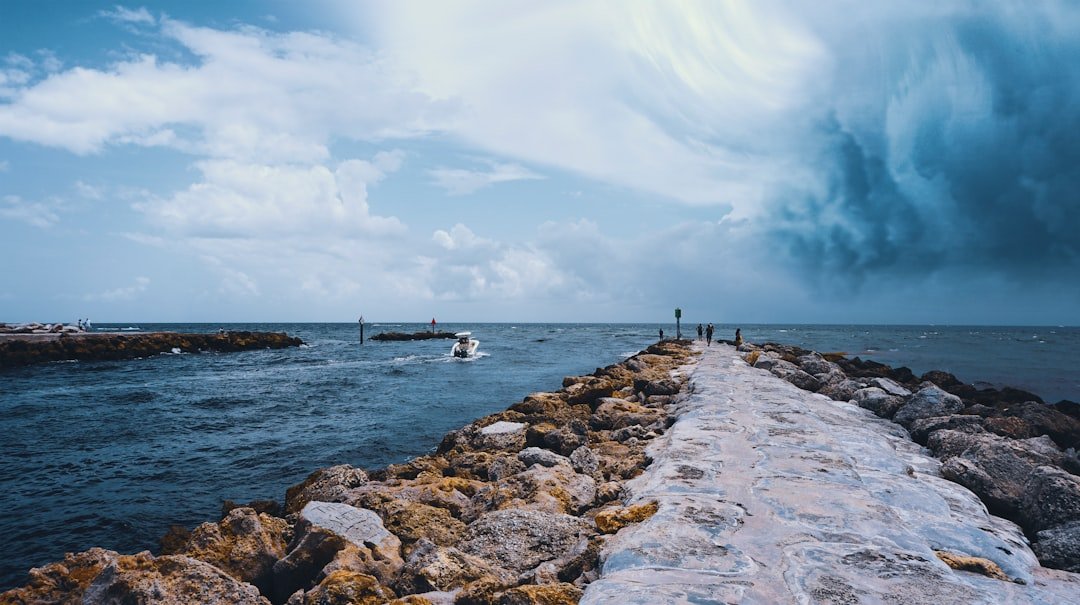
- Severe Storms: Coastal areas are getting hammered by storms with higher wind speeds and more devastating storm surges.
For decades, insurers used historical data—looking back 50 or 100 years—to predict future risk. That model is officially broken. The past is no longer a reliable guide for the future. Today, insurers are using sophisticated climate models, and frankly, they don't like what they see. They see a future where these "extreme" events become the new normal.
And when a risk becomes normal, it challenges the very foundation of how insurance works.
The Domino Effect: Why This is More Than Just an Insurance Problem
Okay, so you might be thinking, "This is tough for people in high-risk areas, but how does it affect me?" The truth is, the ripple effects are enormous and can destabilize entire economies.
Here’s how the dominoes fall:
-
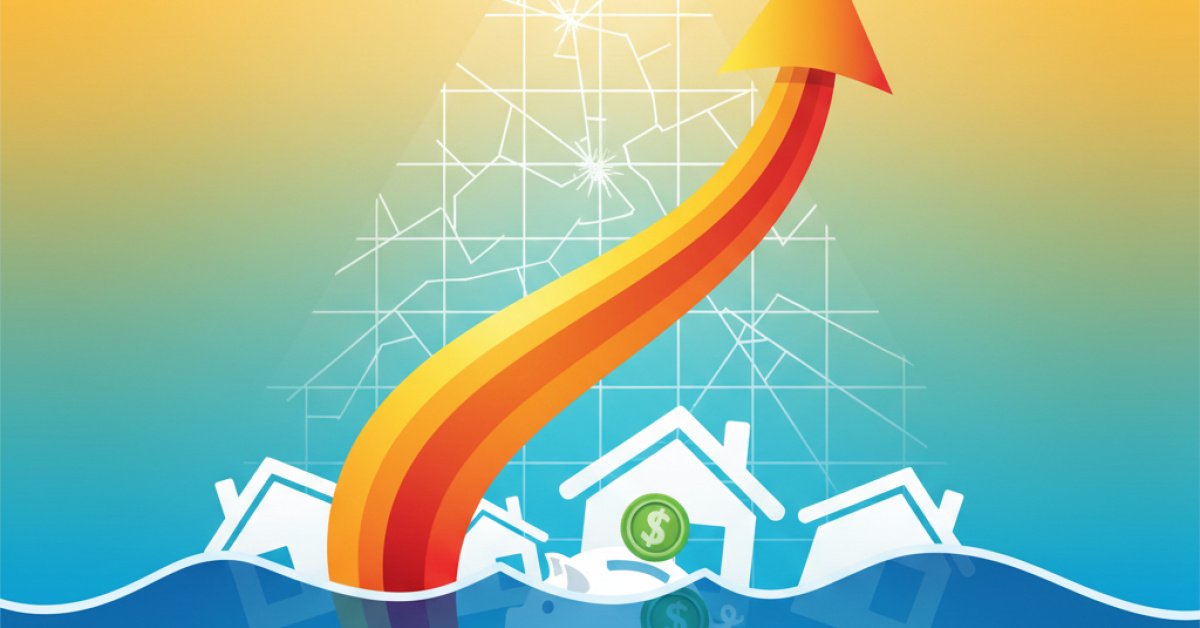
The Mortgage Crisis: First, you can't get a mortgage without home insurance. No bank will lend you hundreds of thousands of euros for an asset that could be washed away or burned down tomorrow with no way to recoup the loss. So, when insurance pulls out, the mortgage market freezes.
-
Plummeting Property Values: If you can't sell your home because no one can get a mortgage for it, what happens to its value? It craters. People can find themselves trapped, owning a home that is suddenly worth a fraction of what they paid, and they still have to pay off the original loan.
-
Community Collapse: This isn't just about individual homeowners. When property values collapse, the local tax base erodes. That means less money for schools, roads, and emergency services. Businesses might close. People who can afford to leave, do. What's left is a community hollowed out, facing enormous climate risks with fewer resources to handle them.
This creates a dangerous feedback loop. The areas that need the most investment in flood defenses or wildfire prevention are the very ones that are losing their economic base. It’s a structural failure that we’re only just beginning to grapple with.
Is There a Way Out of This?
This is the million-dollar question, and I'll be honest, there are no easy answers. This isn't a problem that insurers can solve on their own. It’s a societal issue that requires a completely new way of thinking.
Some of the ideas being discussed are difficult, but necessary:
- Public-Private Partnerships: In some cases, governments may need to step in and act as an insurer of last resort, creating state-backed insurance pools for risks that the private market can no longer bear. France and Spain already have systems like this, but they are being strained like never before.
- Prevention and Adaptation: We can't just be in a cycle of rebuilding the same way in the same place. This means investing heavily in real, tangible defenses. Think better sea walls, homes built on stilts, and creating buffer zones around forests. It means making our communities genuinely more resilient.
- The Toughest Conversation of All: In some places, we might have to face the heartbreaking reality that it’s no longer safe to live there. The concept of "managed retreat"—helping people relocate from areas of extreme and unavoidable risk—is politically and emotionally charged, but it has to be on the table.
Ultimately, insurance is the canary in the coal mine. It's a financial system that is incredibly sensitive to risk. And right now, it’s sending us a very clear, very loud signal: our old assumptions about safety and security are being washed away.
This isn't about blaming insurance companies. They are just the messengers, the mathematicians pointing out that the numbers no longer add up. The real challenge is for us—as a society, as governments, and as individuals—to listen to that message and act before the dominoes fall any further. The dream of that safe, secure home depends on it.