Go ahead, try it. Next time you’re at a party, ask someone what they think about the insurance industry. I’ll bet you a dollar you get one of three reactions: a blank stare, a slight groan, or a story about a frustrating claims process.
Nobody ever says, "Wow, insurance! That sounds so exciting and innovative!"
And that, right there, is our problem. We work in an industry that is, quite literally, the financial safety net of society. We help people rebuild their lives after a disaster, we give businesses the confidence to take risks, and we ensure families are taken care of when the worst happens. It’s a noble profession. So why does it have the reputation of being... well, a bit of a snooze-fest?
I was thinking about this the other day after reading some insights from industry leader Octavia Bush. It really got me wondering: how can we, the people on the inside, make insurance more appealing to the outside world? Not just to customers, but to the smart, creative, and ambitious people we desperately need to join our ranks.
Let's Tackle the Elephant in the Room: Our Reputation
We can’t fix a problem until we admit we have one. For decades, the insurance industry has been seen as a towering, unchangeable institution. We're the folks with the dusty filing cabinets, the impossibly long forms, and the phone trees that lead to nowhere.
Where did this come from?
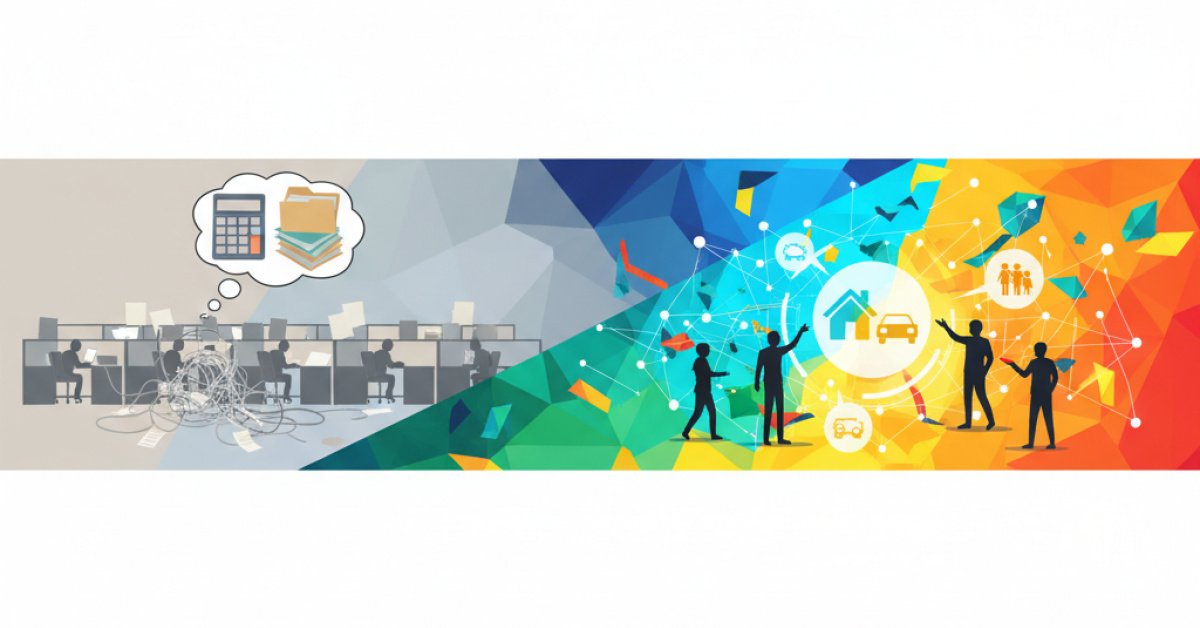
Honestly, we kind of earned it. For a long time, the industry was built on legacy systems, complex language that only lawyers could love, and a very traditional, suit-and-tie culture. Change was slow, and innovation wasn't exactly a top priority. The whole model was built on paper, handshakes, and a process that hadn't changed much in 50 years.
The world, however, has changed. People can order a car, manage their entire stock portfolio, and get a degree from their phone. They expect simple, transparent, and instant experiences. When they run into our world of endorsements, subrogation, and actual cash value, it feels like stepping back in time. And who wants to work in a time machine that only goes backward?
So, How Do We Flip the Script?
Talking about the problem is easy. Fixing it is the hard part. But it's not impossible. It comes down to a few fundamental shifts in how we think about our own industry.
It Starts with Telling a Better Story
Here’s a little secret: we’re in the business of hope.
We don't sell paper policies. We sell peace of mind. We sell the promise that if your world falls apart, someone will be there to help you put the pieces back together. That's an incredibly powerful story! But we rarely tell it.
Instead, we talk about premiums, deductibles, and liability limits. We lead with the product, not the purpose.
Imagine if we changed that. What if, when recruiting a new data scientist, we didn't just talk about optimizing risk models? What if we said, "Your work will help us predict where wildfires are most likely to strike, so we can help entire communities become more resilient." Now that’s a job with a mission.
We need to stop seeing ourselves as policy-pushers and start seeing ourselves as financial first responders. That's a story people can get behind.
Let's Get Real About Technology
For too long, "innovation" in insurance meant launching a clunky online portal that barely worked. That's not good enough anymore. We need to embrace technology in a way that actually makes people's lives easier.
What does that look like?
- A killer mobile app: Let people file a claim by taking a few pictures on their phone. Let them get updates in real-time, just like tracking a package.
- Using data for good: We have so much data. Let's use it to offer personalized advice, like telling a homeowner, "Hey, we've noticed a pattern of water damage in your area. Here are three simple things you can do to protect your basement." That's proactive, not just reactive.
- Simple, digital-first products: Why does it take 30 pages to insure a small apartment? Let's create streamlined products that people can understand and buy in minutes, not hours.
When we start building technology that feels as intuitive as the other apps people use every day, we'll not only get happier customers, but we’ll also attract the tech talent who want to build cool, meaningful things.
Making Insurance a Place People Actually Want to Work
If we want to attract the next generation, we have to offer more than a steady paycheck and a decent benefits package. The best and brightest want to make an impact, solve interesting problems, and grow their careers.
We need to show them that insurance is the place to do that. Our industry is sitting on some of the most fascinating challenges out there. How do you insure a self-driving car? What's the risk of a global cyberattack? How do we protect coastal cities from rising sea levels? These are massive, complex problems that require creativity, data analysis, and bold thinking.
And let's be honest, the culture needs to evolve. We need to create workplaces that are more flexible, more diverse, and less hierarchical. We need to show young people that there's a path for them here, whether they're a marketing genius, a software developer, or a customer experience designer—not just an aspiring actuary or underwriter.
This Isn't a Revolution, It's a Conscious Evolution
Look, we're not going to change our industry's reputation overnight. This isn't about throwing everything out and starting from scratch. The foundations of insurance—pooling risk, providing security—are as important as they've ever been.
But it is about a conscious choice to evolve. It's about deciding to be more human, more transparent, and more focused on the real people we're here to serve. It's about simplifying our language, upgrading our tools, and shouting our purpose from the rooftops.
The change really does start with us, the people who are already here. It’s in how we explain our jobs to our friends, how we treat our customers during a difficult claim, and how we welcome new ideas and new people into our teams. It's a big job, but if we want this industry to thrive for the next 100 years, it's the most important work we can do.