When you picture a farmer, what comes to mind? For a lot of us, it’s a classic image: someone in overalls, maybe on an old green tractor, surveying acres of land under a wide-open sky.
That picture isn’t exactly wrong, but these days, it’s definitely incomplete. You should probably add a tablet, a drone, and maybe a herd of cows that can basically tell you when they’re feeling under the weather.
It sounds like science fiction, but it’s happening right now, and it's a huge deal for anyone in the risk and insurance world. We spend our days talking about how to manage risk, and honestly, there's no better way to manage it than to see it coming and stop it in its tracks. This whole movement of using tech to "predict and prevent" losses is something we're watching closely, and the agricultural sector is putting on an absolute masterclass.
What if a Cow Could Tell You She's Sick?
Let's start with a story I read recently that really stuck with me. Imagine you're a dairy farmer. You've got hundreds of cows, and your livelihood depends on them staying healthy. Trying to spot the one cow that’s just starting to get sick, before it spreads or gets serious, is like trying to find a needle in a haystack.
But what if the needle could change color and wave a little flag?
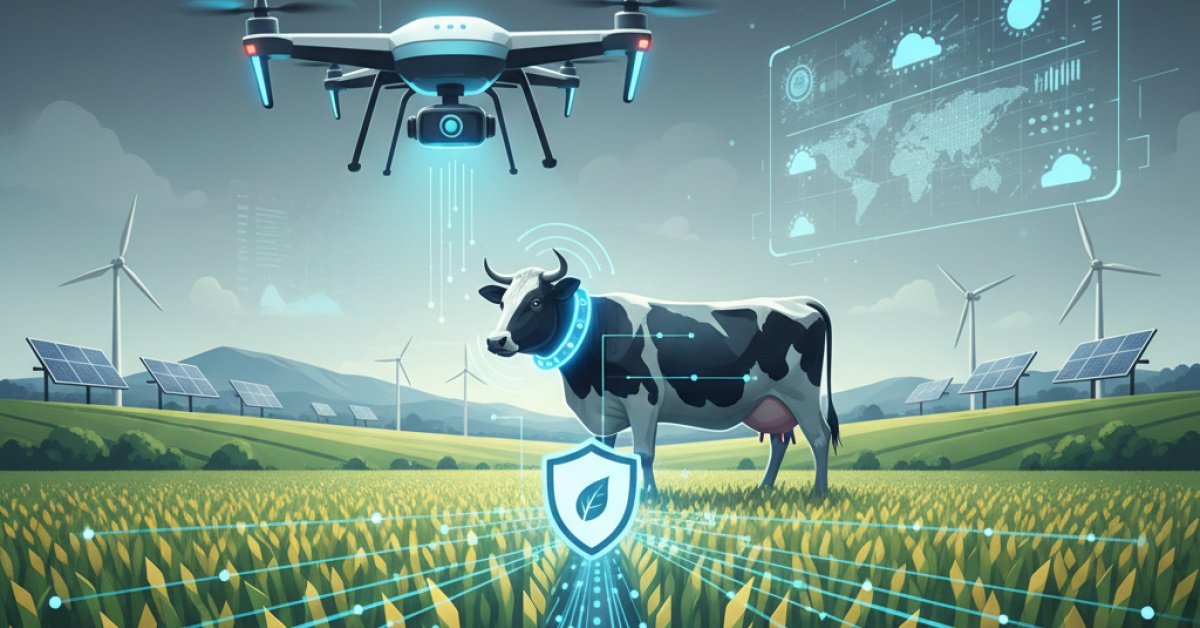
That's basically what's happening with new "smart collar" technology. Cows are being fitted with these high-tech collars that monitor their health—things like their temperature and activity levels. If something is off, the cow’s ear tag might change color, sending a clear signal to the farmer.
Think about that for a second. The farmer can just glance at the herd, or even check a monitor from their desk, and instantly know which animal needs attention. They can intervene early, treat the cow, and prevent a minor issue from becoming a major, costly vet bill or, even worse, a catastrophic loss. It’s a perfect, real-world example of prevention in action.
Farming with a Bird's-Eye View
It’s not just about the animals, either. The same incredible innovation is happening out in the fields.
For years, fertilizing a crop meant blanketing the entire field. But here’s the thing: not every part of a field needs the same amount of nutrients. Some spots are rich, and others are struggling. Blanketing the whole thing is inefficient, wastes money, and, frankly, isn't great for the environment when excess nitrogen runs off into streams.
Now, enter the drones.
Farmers are using drones to fly over their fields and collect incredibly detailed data. These eyes in the sky can identify exactly which patches of the crop are struggling and need a little extra help. So, instead of a one-size-fits-all approach, the farmer can apply fertilizer with surgical precision, only where it's needed most.
The results are pretty amazing:
- Better Yields: The struggling parts of the field get the boost they need, leading to a healthier, more productive crop.
- Cost Savings: The farmer isn't wasting money spraying expensive fertilizer where it won't do any good.
- Environmental Protection: By using less fertilizer overall, it prevents that harmful runoff into our waterways.
This is what we call a win-win-win.
Why This Matters So Much for Farmers
You have to remember, our farmers are under immense pressure. They operate on razor-thin margins, and a single bad season can be devastating. They’re battling unpredictable weather, fluctuating market prices, and rising costs for just about everything.
So, technology like this isn’t just a cool gadget. It’s a lifeline.
Saving money on fertilizer or preventing the loss of even a few cows isn't a small thing—it can be the difference between ending the year in the red or the black. It makes their businesses more resilient, more sustainable, and ultimately, more insurable.
And that’s where we come in.
So, What Does This All Mean for Insurance?
When we see this kind of innovation, we don't just see better farming—we see a fundamental shift in risk. And when risk changes, insurance has to change with it.
For decades, farm insurance was primarily about reacting to loss. A hailstorm wipes out a crop? We write a check. A disease sweeps through a herd? We write a check. But this "precision agriculture" flips the script.
Here’s how it impacts us:
1. Smarter Underwriting: When an underwriter is assessing a farm, knowing they use this kind of predictive tech gives us a much clearer picture of their risk profile. A farm that can spot a sick cow in hours, not days, is simply a lower risk.
2. Potential for Better Premiums: While the industry is still adapting, it’s just common sense. Lower risk should eventually translate to better insurance rates. We might start seeing discounts or preferred pricing for farms that invest in these loss-prevention technologies.
3. Fewer and Smaller Claims: This is the big one. The goal is to avoid the claim in the first place. By catching problems early, a farmer can prevent a small issue from spiraling into a major claim. That’s good for the farmer’s bottom line and for the insurer’s.
It’s a powerful reminder that the future of insurance isn’t just about being there after something goes wrong. It’s about being a partner in preventing things from going wrong in the first place. Seeing our farmers lead the charge is genuinely inspiring, and it gives you hope that we can build a more resilient and sustainable food supply for everyone. That’s the kind of progress we love to see.