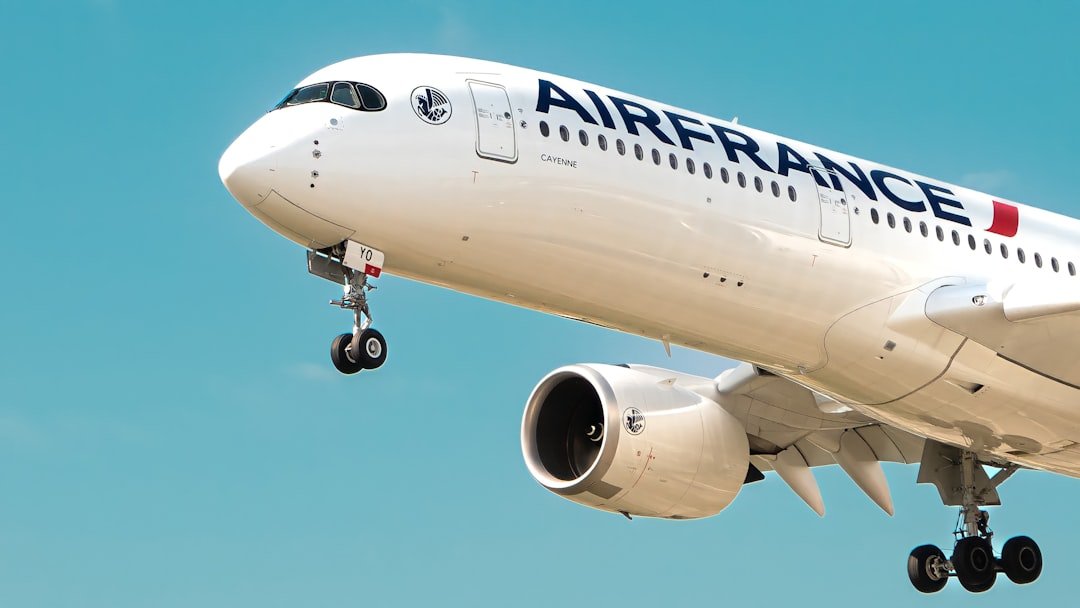
It’s been over a decade, but for the families of the 228 people lost on Air France Flight 447, the fight for accountability has never stopped. The plane disappeared over the Atlantic in 2009 on its way from Rio to Paris, and the story that followed has been one of immense grief and a frustratingly complex legal battle.
Just when it seemed like the case was closed, with both companies acquitted a few years back, a Paris appeals court just overturned that decision. Airbus and Air France have now been found guilty of corporate manslaughter.
For most people, this is a story about justice and corporate responsibility. And it absolutely is. But for those of us in the insurance world, a verdict like this is a seismic event. It’s a moment that rips the curtain back on one of the most high-stakes, complex, and frankly, fascinating corners of our industry: aviation insurance. Let's talk about what this really means.
A Verdict That Changes the Narrative
First, a quick recap of the journey here. The initial trial ended with an acquittal, a decision that was devastating for the victims' families. The court at the time said that while faults were committed, a direct causal link to the crash couldn't be proven. It was a legal technicality that felt, to many, like a deep injustice.
But the appeals court saw it differently. They’ve now held both the manufacturer, Airbus, and the airline, Air France, criminally responsible. This isn’t just a slap on the wrist. A corporate manslaughter conviction is a powerful statement that goes far beyond simple negligence.
So, what’s the difference? Negligence is about failing to take reasonable care. Manslaughter, even in the corporate sense, implies a much deeper level of fault—a gross failure that led directly to loss of life. And in the world of insurance, the degree of fault is everything.
Where Does Insurance Even Fit into a Tragedy Like This?
When a plane crashes, the insurance response is immediate and massive. We're not talking about a simple car insurance claim here. Aviation insurance is a specialized world with astronomical sums of money on the line.
Think of it in two main buckets:
- Hull Insurance: This is basically the insurance on the plane itself. The Airbus A330 involved in the crash was worth a fortune, and this policy pays the airline to replace the physical aircraft. While a huge number, it's actually the more straightforward part of the claim.
- Liability Insurance: This is the big one. This is the coverage that responds to the loss of life and injury. It’s for the passengers, the crew, and any damage caused on the ground. This is where the legal battles happen, and it’s where the claims can climb into the hundreds of millions, or even billions, of dollars.
For Flight 447, the liability portion is the entire story. The guilty verdict directly targets the companies responsible for the people on board, and that puts their liability insurers squarely in the hot seat.
How a "Guilty" Verdict Flips the Script for Insurers
Before this verdict, the insurers for Air France and Airbus could argue from the position of the acquittal. They could negotiate settlements with families based on a "no-fault" or "disputed fault" basis. It gives them a stronger negotiating position.
Now? That’s all out the window.
The Power Shift in Liability Claims
A manslaughter conviction is a game-changer for the victims' families and their lawyers. It essentially serves as proof of ultimate responsibility. This makes negotiating compensation much more straightforward for the families and much, much more difficult for the insurers.
The question is no longer if the companies are liable, but simply how much they have to pay. The legal leverage has completely shifted. Insurers who have been holding reserves for these claims for over a decade now have to face the reality that those payouts are not only certain but could potentially be higher due to the nature of the conviction.
A Perfect Example of a "Long-Tail" Claim
In insurance, we talk about "long-tail" claims. This is the perfect, if tragic, textbook case. A long-tail claim is one where the final settlement doesn't happen for years, sometimes even decades, after the event occurred.
Think about asbestos claims or complex environmental disasters. Aviation crashes are right up there. It takes years to investigate, determine fault, and work through the court system.
For an insurer, this is a nightmare. They have to set aside huge amounts of money (called reserves) for a claim, but they don't know for years what the final bill will be. They're trying to predict the outcome of a legal process that, as this case shows, can take unexpected turns. This verdict forces a major re-evaluation of those reserves.
What Does This Mean for the Future of Aviation Insurance?
A single, major event can send ripples across the entire insurance market. While the Flight 447 loss was already "priced in" to the market years ago, the finality and severity of this verdict will still have an impact.
Here’s what we’re likely to see:
- Tougher Underwriting: Insurers are going to get even more granular when underwriting major airlines and manufacturers. They will be looking deeper into pilot training protocols (a key issue in the AF447 crash), maintenance records, and how manufacturers communicate potential equipment flaws to their airline customers.
- Potential Premium Impact: The aviation insurance market is cyclical. A massive, definitive loss like this contributes to what we call a "hardening" market. This means insurers become more cautious, capacity might shrink a bit, and premiums could rise for everyone as the industry absorbs the cost of the risk.
- A Renewed Focus on Safety Culture: At the end of the day, insurers are risk managers. A verdict like this reinforces the financial cost of a poor safety culture. It gives insurers more leverage to demand the absolute highest standards from the companies they cover, because now there’s a clear legal precedent linking corporate failures directly to a criminal conviction.
This story is a stark and somber reminder of what our industry is really about. Behind the policies, the premiums, and the legal jargon, insurance is a promise to respond when the worst happens. For the families of Flight 447, no amount of money can undo their loss. But this verdict provides a measure of accountability, and for the insurers involved, it marks the beginning of the final, painful chapter in one of the longest and most challenging claims in modern aviation history.