Have you had that feeling lately? You know the one. You look at the news, you talk to people, and it just feels like the world is getting… spikier. More unpredictable. Like the rules we all used to play by are being rewritten on the fly.
Well, it turns out you’re not just imagining it. A huge new Global Risk Report just put a name to this feeling, and it’s a phrase you’re going to be hearing a lot: the “Age of Competition.”
And for those of us in the insurance world, this isn’t just some fancy headline. It’s a five-alarm fire bell. The report makes it crystal clear that insurers are standing right on the front lines of this new, chaotic world order. So, let’s talk about what this actually means for us, because it’s a big deal.
So, What Exactly is This "Age of Competition"?
First things first, let's get one thing straight. When the report talks about "competition," it's not talking about friendly business rivalry. This isn't about two companies trying to outsell each other.
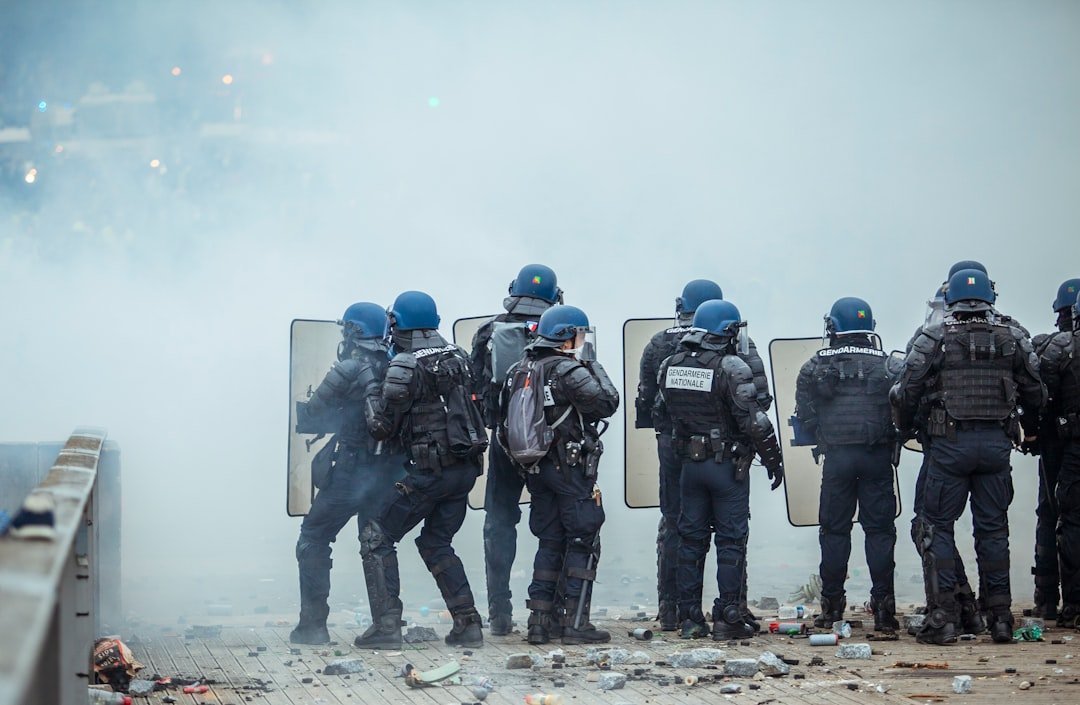
Think of it more like a global game of chess where some of the players have decided to flip the board over. We’re moving away from an era of cooperation and globalism into a much more fragmented, "every-nation-for-itself" kind of world.
It’s a world where:
- Geopolitical tensions are the new normal.
- Economic alliances are constantly shifting.
- Countries are more focused on their own national interests, even at the expense of others.
Basically, the long period of relative stability and predictable global trade we’ve enjoyed for decades? That’s fading in the rearview mirror. And when the old rules go out the window, a whole new world of risk comes rushing in.
Why Insurance is Suddenly in the Hot Seat
This is where we come in. As insurers, our entire job is to understand, price, and cover risk. But the risks brewing in this "Age of Competition" are bigger, messier, and more interconnected than anything we’ve had to deal with before.
Let me give you a few examples of how this plays out.
Imagine you’re a carrier that provides supply chain insurance. For years, you’ve based your models on the idea that goods will flow relatively freely across borders. But what happens when a sudden trade war erupts? Or a key shipping lane becomes a geopolitical flashpoint? Suddenly, your models are obsolete. The risk of disruption has skyrocketed, and you’re the one holding the bag.
Or think about political risk insurance. This used to be a niche product for companies operating in a handful of unstable countries. Now? Political instability is a global concern. Companies everywhere are worried about governments seizing assets, canceling contracts, or imposing crippling regulations overnight. The demand for this coverage is exploding, but how do you even begin to price that kind of uncertainty?
And we haven't even touched on cyber. In this new age, cyberattacks are no longer just the work of rogue hackers. They are increasingly tools of statecraft. We’re talking about sophisticated, state-sponsored attacks designed to cripple critical infrastructure, steal intellectual property, or sow chaos. For a cyber insurer, the line between a criminal act and an act of war is getting blurrier by the day, which has massive implications for coverage and claims.
The Problem is, Everything is Connected
Here’s the really tricky part. None of these risks exist in a vacuum. They’re all tangled up together.
A geopolitical conflict in one part of the world can trigger a commodity shortage, which causes economic inflation, which leads to civil unrest, which creates even more political instability. It’s a domino effect, and insurers are the ones who have to figure out where the dominoes are going to fall.
The old way of looking at risk in neat little silos—this is property risk, this is liability risk, this is business interruption—is completely breaking down. We’re now facing systemic risks that can cascade across the entire global economy in the blink of an eye.
What Does This Mean for Carriers on a Practical Level?
Okay, so the world is getting riskier. What does that actually mean for the day-to-day business of insurance? Well, it means we’re facing some serious challenges.
For one, our data is becoming less reliable. Underwriting has always been about looking at the past to predict the future. But when the fundamental nature of the world is changing, historical data can be misleading. We’re sailing in uncharted waters, and our old maps might not be much help.
This puts immense pressure on underwriters and risk modelers. How do you price a risk you’ve never seen before? How do you set aside enough capital to cover a potential "black swan" event that could be triggered by a single political decision halfway around the world? These are the tough questions keeping insurance executives up at night.
And frankly, it raises questions about whether some of these emerging risks are even insurable in the traditional sense. There's a real and growing concern about a "protection gap," where businesses and individuals face massive risks that the private insurance market simply can't cover at an affordable price.
It’s Not All Doom and Gloom
Now, after all that, you might be thinking it’s time to pack it in and find a new career. But I don’t see it that way. Yes, it’s a massive challenge. But it’s also a massive opportunity for the insurance industry to step up and show its true value.
In a world that feels increasingly unstable, people and businesses are desperate for security and certainty. And that’s what we sell. We are the financial first responders. We provide the safety net that allows people to take risks, innovate, and build.
This new era demands that we get smarter. It means investing in better technology, using AI and predictive analytics to spot trends, and developing innovative new products that are tailored to these complex risks. It also means we have to get better at talking to our clients, not just as policy-sellers, but as true risk advisors.
More than ever, this is the time for collaboration. We’re going to see a greater need for public-private partnerships to tackle some of the biggest risks, like climate change and pandemics, that are too big for any one sector to handle alone.
The "Age of Competition" is here, and there’s no going back. For us in the insurance industry, it means our work has never been more difficult. But it’s also never been more important. We’re the ones standing in the gap, helping to build resilience in a world that desperately needs it. It’s a huge responsibility, but honestly, it’s why we’re all here in the first place.