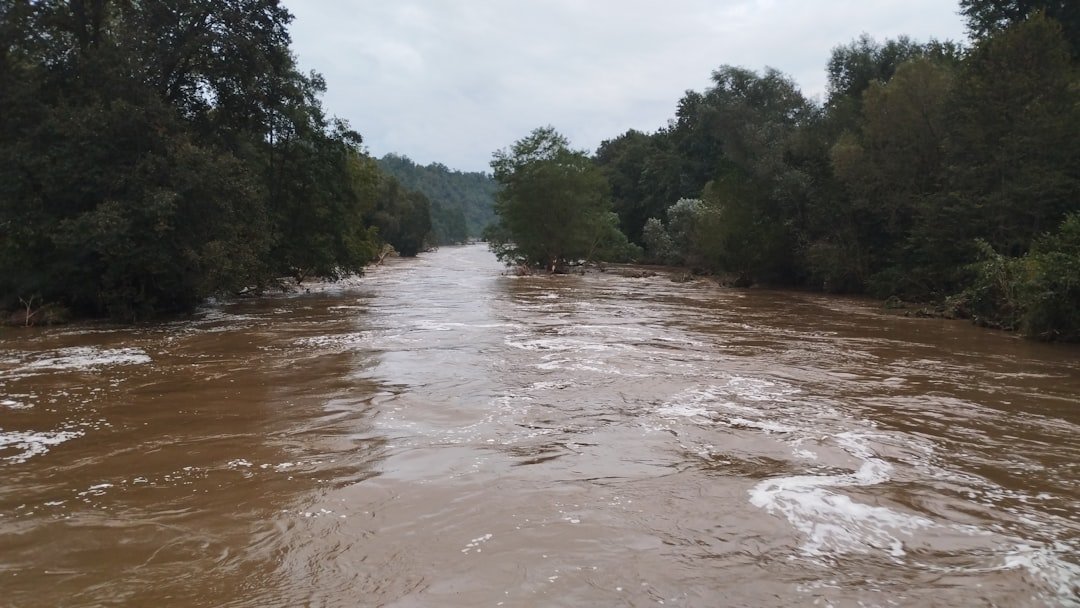
Let’s be honest for a second. If you’ve ever had to quote a flood policy, you know it can feel like a trip back in time. The paperwork, the manual checks, the waiting... it’s a slow, clunky process for a risk that’s becoming more and more common. For years, we’ve all talked about the massive “protection gap” in flood insurance, and a big reason for that gap is that it’s just been too difficult and inefficient to get coverage into people’s hands.
It’s a frustration I hear all the time from brokers and underwriters. You want to help your clients, but the tools just haven’t kept up.
Well, it looks like some folks over at Floodbase have been listening. They just rolled out something that caught my eye: a new platform called the Floodbase Quote API. And I think it might be one of those quiet developments that ends up making a really big difference for insurers and MGAs trying to navigate the tricky waters of flood insurance.
So, What Is This Thing, Exactly?
In simple terms, Floodbase has built a tool that plugs right into an insurer's or MGA's existing system. Its goal is to take that slow, manual quoting process and make it practically instant.
Imagine you’re trying to build a new flood insurance product or offer coverage to a whole portfolio of properties. Traditionally, you’d be looking at a mountain of work, manually assessing each location. The Floodbase API is designed to automate all of that. You tell it what you need, and it gives you the data and pricing right away.
Think of it like this: it’s the difference between calling a restaurant, being put on hold, and slowly reading your order over a crackly line versus just tapping what you want into an app and having it confirmed in seconds. They’re trying to bring that same level of speed and efficiency to a corner of our industry that desperately needs it.
The Magic Word: "Parametric"
Now, the key to how they do this is that it’s a parametric platform. I know, I know—"parametric" is one of those industry buzzwords that gets thrown around a lot. But it’s actually a pretty simple and powerful idea.
Let me break it down.
Traditional insurance is based on indemnity. That means after a loss—say, a flood—an adjuster comes out, assesses the specific damage to your property, and you get paid for what was lost. It can be a long, complicated process.
Parametric insurance works differently. It’s not based on the actual damage, but on a pre-agreed trigger.
Here’s a simple example:
- You and the insurer agree on a trigger, like "if the water level recorded by the sensor at the end of your street reaches 15 feet."
- You also agree on a payout amount, say, $50,000.
- A major storm hits. The sensor records a water level of 16 feet.
Because the trigger was met, the policy automatically pays out the $50,000. That’s it. No adjusters, no haggling over the cost of new drywall, no waiting for weeks or months. The event happened, the trigger was pulled, and the payment is released. It's clean, fast, and transparent.
This is what Floodbase is enabling. Their platform uses massive amounts of data from satellites, river gauges, and other sources to create these triggers and price the risk accurately.
Why This Could Be a Game-Changer for the U.S. Flood Market
Okay, so a faster, parametric quoting tool is cool. But why does it matter so much for the U.S. flood market specifically?
Because that market is, to put it mildly, a mess.
We have millions of homes and businesses that are completely uninsured or underinsured for flood. The National Flood Insurance Program (NFIP) does its best, but it can’t cover everyone, and private insurance has struggled to fill the void. A big reason for that struggle is that writing small, individual flood policies has been too expensive and time-consuming for many carriers to bother with.
This is where a tool like the Floodbase API comes in. By automating the quoting, it suddenly becomes possible for an MGA or insurer to:
- Offer new types of coverage: Maybe a business just wants a policy that covers business interruption if the main road to their warehouse floods for 48 hours. Parametric makes that possible.
- Create portfolio-level solutions: A real estate investor could get a single policy that covers the flood risk for their 50 properties across a state, with triggers specific to each location.
- Dramatically speed up distribution: Brokers can get quotes for clients in minutes, not days, making it much easier to sell the coverage and actually close the protection gap, one policy at a time.
It essentially lowers the barrier to entry. It makes flood insurance a more viable, profitable, and scalable product for the private market, which is exactly what we need to start making a real dent in that uninsured population.
Honestly, it feels like we're moving from a world where flood insurance was a one-size-fits-all, take-it-or-leave-it product to one where we can create tailored, flexible solutions that fit a client's specific needs. And that’s a huge step forward. It’s definitely something I’ll be keeping a close eye on, and if you’re in the business of covering property risk, you probably should be, too.