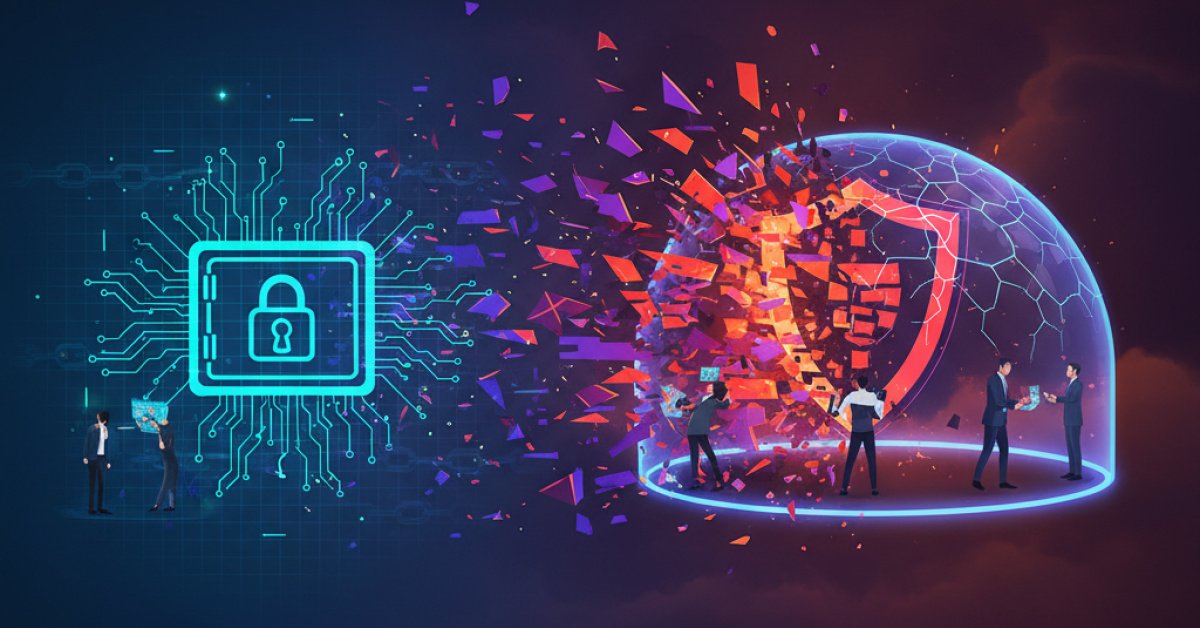
Let’s be honest, for years we’ve had a pretty standard playbook for cyber incidents, haven't we? A client gets hit with ransomware, their systems are locked up, and the conversation immediately turns to two things: backups and recovery. Can we restore the data? How quickly can we get them back online? The cyber insurance policy was there to help clean up the mess and get the business running again.
It was a stressful but familiar fire drill.
But here’s the thing: the criminals have torn up that playbook. They’ve realized that locking up a company’s systems is one thing, but holding its most sensitive data hostage is a whole different level of leverage. We’re seeing a massive shift away from simple ransomware and toward a much scarier, “data-first” model of extortion. And frankly, it changes everything for us and our clients.
So, What Exactly Changed with Cyber Extortion?
Think of it like this. Old-school ransomware was like a burglar who changes the locks on your house. You're locked out, it’s a huge pain, and you might have to pay them for the new key. But ultimately, all your stuff is still inside. If you have a spare key (a good backup), you can eventually get back in and life goes on.
This new data-first approach is different. The burglar doesn't just change the locks. They sneak in, photocopy every sensitive document in your filing cabinet—customer lists, financial records, employee PII, secret product designs—and then leave a note on your desk. The note says, "I have copies of everything. Pay me, or I'm posting it all online for your competitors, customers, and the whole world to see."
See the difference? Your house isn't locked. You can still operate. But the threat is now about exposure, not just interruption. The damage is reputational, regulatory, and potentially business-ending.
And this isn't some far-off trend. Experts are already pointing to 2026 as the year when this data-theft model becomes the dominant form of cyber extortion. The clock is ticking, and our advice needs to evolve, fast.
Why "Just Restore from Backup" Is a Dangerous Myth Now
In the old ransomware world, a solid backup and recovery plan was the hero. It was our "get out of jail free" card. If a client had diligently backed up their data, we could often tell the criminals to take a hike and just restore everything.
But what good is a backup when the problem isn't that your data is gone, but that it's been copied?
You can’t un-steal data. You can't restore your way out of a public leak. Paying the ransom is a huge gamble, too. You have zero guarantee that the criminals will actually delete the data they stole. They could take your money and still leak it, sell it on the dark web, or come back and extort you again in six months.
The entire foundation of our recovery-focused strategy crumbles in this scenario. The control has shifted. The power to mitigate the damage is no longer in our hands after the fact. It’s a completely different ballgame, and it demands a completely different strategy.
Let's Talk About Prevention: The New Center of the Universe
If we can’t effectively recover from a data breach, what’s left?
Prevention. It’s as simple and as complicated as that.
The entire focus of our risk management conversations has to pivot from cleanup to lockdown. The new critical question isn't "How fast can you get back up?" It's "How certain are you that they can't get your data in the first place?"
This feels like a huge shift, and it is. We’re moving from being the paramedics who show up after the crash to being the driving instructors who prevent the crash from ever happening. It means we have to get much more involved in our clients' pre-breach security.
So what does this look like in practice? It’s about pushing for critical controls that stop data theft before it starts. Things like:
- Data Discovery and Classification: You can't protect what you don't know you have. Do our clients know exactly where their most sensitive data lives? Is it tagged, classified, and tracked?
- Access Controls: Who has the keys to the kingdom? We need to be advising clients on the principle of "least privilege"—giving employees access only to the data they absolutely need to do their jobs.
- Monitoring and Detection: Are they watching the doors? Sophisticated tools can now detect unusual activity, like a user suddenly trying to download thousands of files at 2 a.m. This is the new alarm system.
- Strong Authentication: Multi-factor authentication (MFA) is no longer a "nice-to-have." It's a non-negotiable baseline for protecting access to critical systems and data.
The goal is to make it so incredibly difficult for a bad actor to get in and grab the crown jewels that they simply give up and move on to an easier target.
How We, as Brokers, Need to Change the Conversation
This is where the rubber meets the road for us. We can’t just be the people who sell the policy anymore. We have to become true risk advisors, guiding our clients through this new and frankly terrifying landscape.
Our conversations need to change. We have to move beyond the application and the quote and start asking tougher questions.
Instead of just asking, "Do you have backups?" we need to ask, "Can you show me how you're preventing an attacker from exfiltrating your customer database?"
Instead of, "What's your business continuity plan?" it needs to be, "What tools are you using to monitor for anomalous data access?"
This won't always be an easy conversation. Some clients will push back. They'll see it as an added expense or a hassle. But it’s our job to help them see the bigger picture. We have to frame it correctly: this isn't just about qualifying for an insurance policy; it's about the survival of their business.
The truth is, the nature of cyber risk has fundamentally changed. The threat is no longer just about downtime; it's about trust, reputation, and exposure. Our role as brokers has to change with it. We have to lead the charge, educating our clients and pushing them toward a prevention-first mindset. Because in the world of data-first extortion, an ounce of prevention isn't just worth a pound of cure—it's the only thing that works.