Have you ever been on a work Zoom call where you just knew something was a little off? Maybe someone’s background was weird, or their connection kept freezing at convenient times. Usually, it’s just a funny story for later.
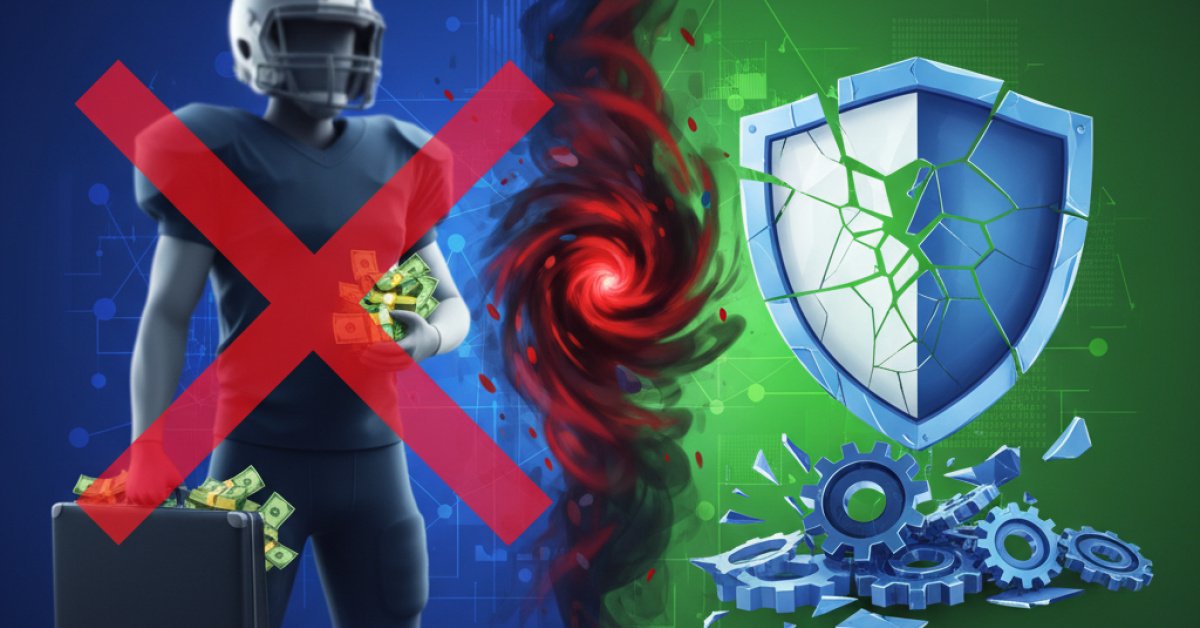
But imagine this: You’re a bank, and you’re on a Zoom call to close a multi-million dollar loan. On the other end is a supposed NFL player. A notary is present, witnessing the whole thing. Everything looks legit. You sign the papers, you wire the money—$2.4 million, to be exact.
And then you find out the person on the other end wasn't an NFL player at all. It was an imposter with a fake ID. A complete scam.
It’s a nightmare scenario, right? But here’s the gut punch. You go to file a claim with your insurance company, thinking, "This is exactly why we pay for top-tier coverage!"... and they deny it. That’s the situation a bank is facing right now, and it’s a fascinating, and frankly, scary, look at the fine print in our insurance policies.
So, What Exactly Happened Here?
Let’s break down this wild story. A bank filed a lawsuit against their insurer, Berkley, after getting hit with a massive fraud. The bank believed they were giving a $2.4 million loan to a professional football player.
The entire closing was done remotely over Zoom—something that’s become incredibly common. The fraudster, pretending to be the athlete, presented an ID. A notary was also on the call to verify the documents and witness the signing, just like they’re supposed to. Everything seemed to check out.
The bank wired the money. And poof. The money was gone, and the "NFL player" was nowhere to be found.
After realizing they'd been had, the bank did what any business would do: they turned to their insurance policy. They had a policy that was supposed to cover losses from forgery or alteration. It seemed like a textbook case. But when they filed the claim, Berkley allegedly came back with a hard "no."
The Million-Dollar Question: Why Did the Insurer Say No?
This is where things get really interesting and dive deep into the nitty-gritty of insurance language. It's the kind of stuff that makes your eyes glaze over until you’re the one out $2.4 million.
According to the lawsuit, Berkley is pointing to a very specific part of the policy. The bank's coverage was for losses from "forgery" or "alteration" of certain documents. You'd think a fake ID would fall under that, right?
Well, not so fast. The insurer’s argument seems to hinge on the way the fraud happened. They’re essentially saying that while a fraud occurred, it wasn't the type of fraud the policy was designed to cover.
Here’s the core of the dispute: The policy had specific language about transactions that are "witnessed by a notary." It seems Berkley is arguing that because a notary was present—even on a Zoom call—it changes how the policy applies. They might be claiming that the loss wasn't a direct result of a "forged" document in the way the policy defines it, but rather a failure in the verification process, which might be excluded.
It’s a bit like having car insurance that covers collisions but not flood damage. You have a damaged car, but the cause of the damage is what determines if you get a check. Here, the bank sees a loss from a fake document; the insurer sees a different kind of failure that they say isn't their responsibility.
But Wait, a Notary Was Involved! Isn't That supposed to PREVENT This?
I know what you're thinking. The whole point of a notary is to be a trusted, impartial witness who verifies someone's identity. Their stamp is supposed to mean something!
And you’re right. But in the world of insurance contracts, every word matters.
The presence of the notary is actually the central point of the conflict. The bank likely saw the notary as a security measure that fulfilled their due diligence. But the insurance company seems to be using that same fact as a reason to deny the claim, pointing to policy language that might treat notarized transactions differently.
This is a stark reminder that technology is moving way faster than a lot of the standard legal and insurance language we rely on. A remote online notarization (RON) is not the same as sitting across a desk from someone and feeling the paper they’re signing. Scammers are getting incredibly sophisticated at exploiting these new, digital processes. They can create "deepfakes" or high-quality fake IDs that can fool someone through a screen.
This case really puts the spotlight on whether the old rules can even apply to our new digital reality.
What This Means for You (Even If You're Not a Bank)
Okay, so you're probably not closing multi-million dollar loans with NFL players. But the lesson here is universal. This lawsuit is a huge cautionary tale for any business—or even individual—that relies on insurance as a safety net.
Here are a few things we can all take away from this:
- The Fine Print is Everything: We all skim the terms and conditions. But in insurance, the definitions, exclusions, and conditions are the whole game. What you think is covered and what the policy actually says can be two very different things.
- Understand Your "Covered Perils": Every policy covers specific risks (often called "perils"). You need to know exactly what those are. Does your business crime policy cover social engineering and phishing attacks? Or does it only cover old-school check forgery? Don't assume.
- Question Your Processes: If your business has moved to remote transactions, have you updated your security protocols? How do you really verify identity through a screen? Relying on old methods in a new world is a recipe for disaster.
This case is still unfolding, and it will be fascinating to see how the courts interpret the policy language. The outcome could set a major precedent for how insurance policies handle fraud in an increasingly digital world.
It’s a tough lesson for the bank involved, but it’s a valuable one for the rest of us. In the end, insurance is a contract. And when millions are on the line, you can be sure each and every word of that contract is going to be put under a microscope. It’s a good reminder to put on our own reading glasses long before we ever need to make a claim.