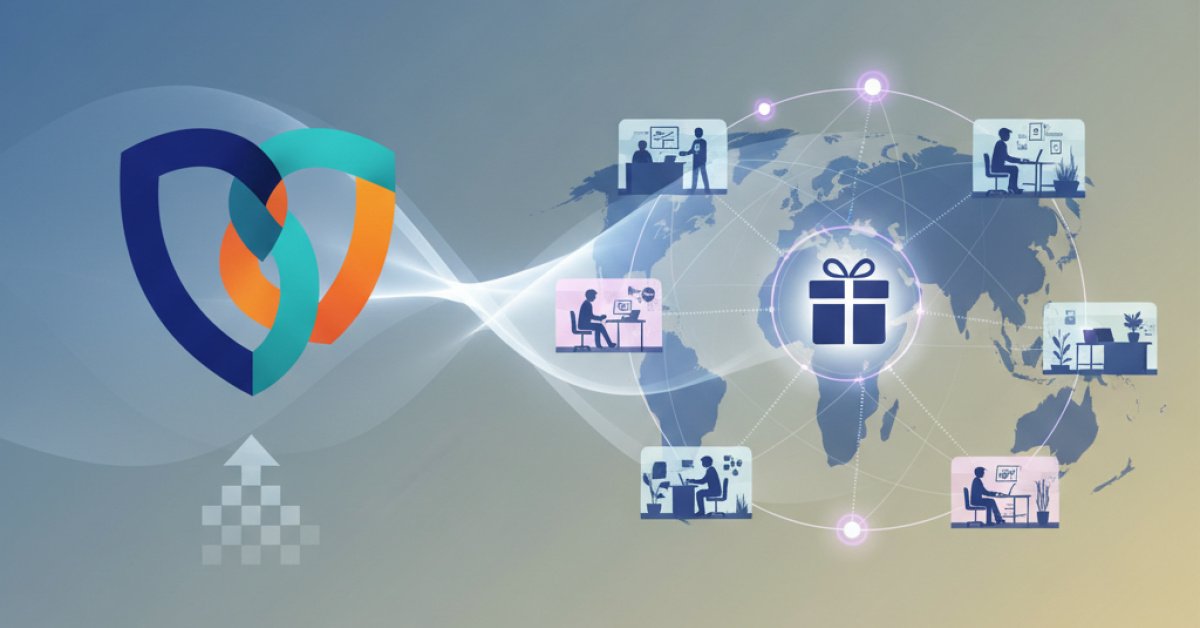
Remember the days of the office-wide charity drive? The giant thermometer in the lobby tracking donations, the bake sales in the breakroom, the "wear jeans for a dollar" Fridays? There was a real energy to it, a sense of everyone pulling together for a good cause, right there in your local community.
But what happens when the lobby is empty and the breakroom is just… your own kitchen?
That's the big question facing the insurance industry right now. We're talking about a sector that's incredibly generous, donating a record $1.3 billion annually. That's a staggering number and something to be proud of. But here’s the tricky part: the way we work has completely changed, and I’m not sure our approach to giving back has caught up.
It's time for a frank conversation. Is the old playbook for corporate philanthropy still working when your team is scattered across dozens, or even hundreds, of different communities? Let's get into it.
The Problem with a Centralized Heart
For decades, the model was simple. A big insurance company had a headquarters or a major office in a city. So, naturally, their charitable efforts were focused right there. They'd sponsor the local Little League team, support the city's food bank, and fund a new wing on the community hospital.
This was fantastic for that one community. It built a powerful local presence and made employees proud to work for a company that was so invested in their hometown.
But now, that "hometown" is everywhere and nowhere all at once. Your top underwriter might be in a suburb of Denver, your best claims adjuster in a small town in Florida, and your IT team spread from coast to coast.
Suddenly, sponsoring a 5K in Hartford, Connecticut, doesn't feel quite as meaningful to the employee logging in from Austin, Texas. The connection is lost. The sense of a shared mission gets diluted when the "community" we're serving is one most of the team has never even visited.
More Than Just a Check: The Employee Engagement Gap
Let's be honest, corporate giving has always had two goals. The first is obvious: to do good in the world. The second is to build a strong company culture and keep employees engaged. It feels good to work for a company that cares.
When giving is local and tangible, employees can see and feel the impact. They can volunteer at the food bank the company supports. They can see the new playground their employer helped build. That direct connection is a powerful motivator.
In a remote-first world, that connection is much, much harder to create. Simply sending a corporate check to a charity near a now-empty headquarters can feel impersonal and disconnected to a remote workforce. It risks turning philanthropy from a hands-on, culture-building activity into just another line item on a corporate social responsibility report.
And if your people don't feel connected to the mission, are you really getting the full value out of your philanthropic efforts? Probably not.
So, What's the New Playbook for Giving?
This isn't about giving less. That $1.3 billion is doing incredible work. This is about giving smarter and more inclusively. It’s about adapting our strategy to match the reality of how we work today.
The good news is, there are some really exciting ways to do this. It just requires a shift in thinking.
Empower Local Champions
Instead of a top-down approach, what if we flipped the script? What if we empowered our employees to be philanthropic leaders in their own communities?
Think about models like:
- Donation Matching: This is a classic, but it’s more important than ever. If an employee in Boise, Idaho, donates to their local animal shelter, the company matches it. The impact is immediate, personal, and deeply meaningful to that employee.
- Volunteer Time Off (VTO): Give employees paid time off specifically to volunteer for causes they care about, wherever they are. This shows you value their time and their passions outside of work.
- Micro-Grants: Create a program where remote employees can nominate small, local non-profits in their area for a corporate grant. A committee (also remote!) can review applications, giving everyone a stake in the process.
This approach transforms employees from passive observers into active participants. The company becomes a facilitator of good, enabling hundreds of positive impacts across the country instead of just one big one.
Find a Cause That Unites Everyone
Another powerful strategy is to rally your distributed workforce around a single, national, or even global cause that transcends geography.
Maybe it's a focus on environmental sustainability, a national disaster relief fund, or a campaign for mental health awareness. These are issues that affect everyone, no matter where they live.
You can organize virtual events, company-wide fundraising challenges, and online awareness campaigns that bring everyone together for a common purpose. It helps rebuild that sense of a unified team, all pulling in the same direction, even if you’re all hundreds of miles apart. It creates a new kind of "digital water cooler" where people can connect over a shared passion for making a difference.
A Moment for a New Kind of Leadership
The insurance industry is built on assessing risk and adapting to change. It's what we do best. This shift in our workforce is just another change we need to adapt to, and that includes the heart of our companies—our commitment to giving back.
Sticking with the old, headquarters-centric model isn't just outdated; it's a missed opportunity. It's a missed chance to engage our remote employees more deeply, to spread our positive impact more widely, and to show that our corporate values aren't tied to a physical building.
It's time to rethink what "community" means. It's not just the city skyline you see from the corner office anymore. It's the collection of towns, suburbs, and cities our people call home. And by investing in all of them, we're not just writing a check—we're building a stronger, more connected, and more resilient company for the future.