Have you ever felt like you’re doing everything right in your business, only to have a curveball thrown from completely out of left field? I’m not talking about a new competitor or a slow sales month. I’m talking about the kind of disruption that starts in a government building hundreds or thousands of miles away and lands right on your doorstep.
It’s a frustrating feeling, and it’s exactly what happened in a business park out in California a while back. Let me tell you about two guys, Robert Luna and Eddie Cole. They worked just down the street from each other, both running their own businesses, both trying to make a living.
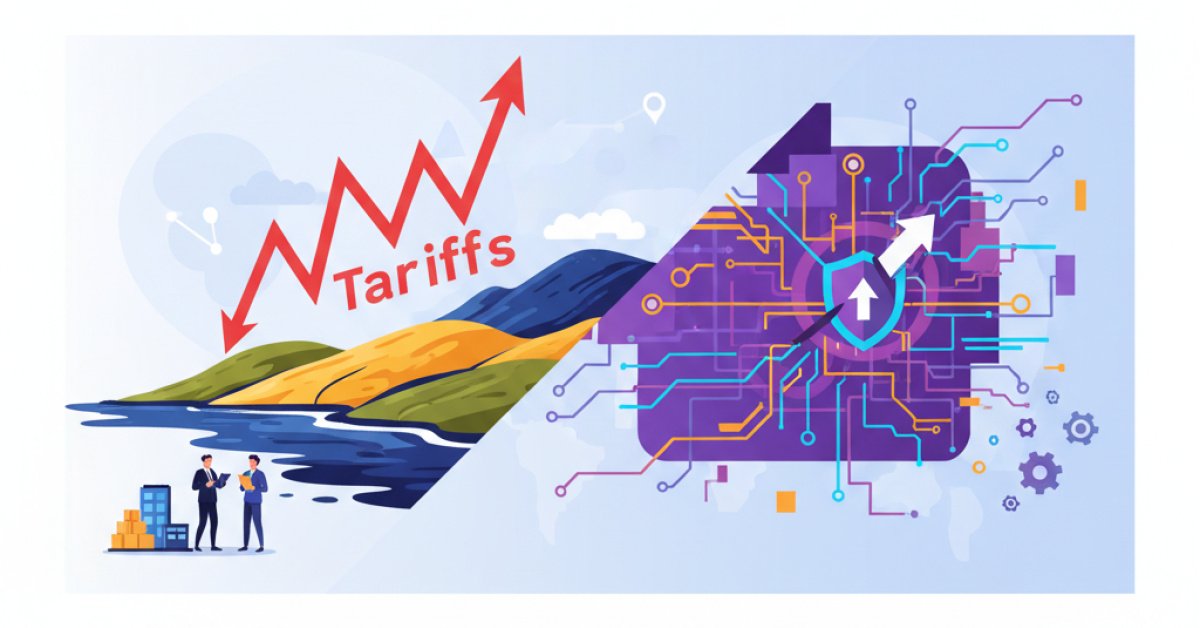
Robert sells beautiful, rustic wooden furniture he imports from Mexico. It’s his passion. But when the U.S. government announced new tariffs, suddenly the cost of his signature products shot up. He was forced to hike his prices, hoping his customers would understand. Down the street, Eddie was facing a similar headache. The tariffs hit his bottom line hard, and he found himself scrambling, trying to design entirely new products just to make up for the lost sales.
Two different businesses, one shared nightmare. A decision made in Washington D.C. was ricocheting through their warehouses, and they were the ones left to deal with the fallout. It’s a perfect, if painful, example of a risk that most business owners don't have on their radar: political risk.
The Invisible Shockwaves of a Trade War
When we hear the word "tariffs" on the news, it sounds so distant and abstract, doesn't it? It's easy to tune it out as just political noise. But for business owners like Robert and Eddie, it’s anything but abstract. It’s intensely personal.
Think of it like a rock thrown into a pond. The initial splash is the announcement of the tariff. But the ripples spread out and affect everything.
For Robert, the first ripple was the immediate increase in the cost of his goods. But then came the others:
- Customer Backlash: Will loyal customers stick around when prices jump 10% or 20% overnight?
- Cash Flow Squeeze: He has to pay the higher costs upfront, long before he makes a sale.
- Inventory Problems: Does he stock up now before costs rise even more? Or does he risk getting stuck with expensive inventory that won't sell?
For Eddie, it was a different kind of scramble. He had to pivot his entire business model on a dime. That meant new designs, sourcing new materials, finding new suppliers—all while trying to keep his current operations afloat. The stress and uncertainty are just immense.
This is what political and economic decisions do. They don't just change a number on an invoice; they change the entire game you thought you were playing.
"Wait, Isn't This Covered by My Business Insurance?"
This is usually the first question I get when I talk about situations like this. It’s a logical one. You have Business Interruption insurance, right? It’s supposed to cover you when you can’t operate and you lose income.
Well, here’s the tough part. In most cases, the answer is no.
Your standard Business Owner's Policy (BOP) or a standalone Business Interruption (BI) policy almost always has a critical requirement: there must be direct physical loss or damage to your property. Think fire, flood, a tornado tearing the roof off—something tangible that forces you to shut down.
A tariff? That’s purely a financial event. It doesn’t physically damage your warehouse or your inventory. It just makes it more expensive. So, from the perspective of a standard insurance policy, there’s no trigger for a claim. It’s a frustrating reality, but it’s a crucial one to understand. Your go-to policy likely won’t help you here.
The Specialized Tools for a Global Economy
So, are business owners like Robert and Eddie just left to fend for themselves? Not entirely. It’s just that these kinds of risks require more specialized tools. The world of commerce is way more interconnected and complex than it was 50 years ago, and insurance has evolved (slowly, sometimes!) to keep up.
If you're dealing with international suppliers, customers, or markets, there are a few types of coverage you should at least know about.
Trade Credit Insurance
Let's say Robert raises his prices, and one of his biggest wholesale clients gets into financial trouble because of it. They can't pay their massive invoice. This is where Trade Credit Insurance can be a lifesaver. It protects your accounts receivable against non-payment by a customer, whether due to their own bankruptcy or, in some cases, political events that prevent them from paying you. It helps stabilize your cash flow when your customers are feeling the squeeze.
Political Risk Insurance
This is the big one, and it’s not just for massive corporations setting up shop in unstable countries. Political Risk Insurance is designed specifically to cover losses from government actions. This can include a wide range of events:
- Embargoes or Sanctions: When a government suddenly prohibits trade with a certain country.
- Asset Confiscation: An extreme scenario where a foreign government seizes your property.
- Currency Inconvertibility: When you can't get your money out of a country.
- Contract Frustration: This is the key one here. It can apply when a government action—like imposing a sudden, steep tariff—makes it impossible to fulfill a contract or makes your business operations unprofitable.
It’s a complex product, for sure. But for a business like Robert’s, which relies entirely on importing from a specific country, it could be the one thing that keeps the lights on when trade policies change unexpectedly.
Your Best Insurance Is a Smart Strategy
Here’s the thing, though. Insurance is a safety net, but it shouldn't be your only plan. Remember Eddie? He was scrambling to design new products. That’s not an insurance claim; that’s a business strategy. He was actively managing his risk by diversifying.
Relying on a single product line, a single supplier, or a single country is incredibly risky in today's world. The smartest thing any business owner can do is build resilience right into their operations.
Think about:
- Diversifying Your Suppliers: Can you source your materials or products from more than one country? Having a backup plan can make you less vulnerable to a trade dispute with a single nation.
- Expanding Your Customer Base: Are all your customers in one domestic market? Exploring export opportunities could open up new revenue streams that aren't affected by local tariffs.
- Building a Cash Cushion: Having a healthy cash reserve is the ultimate form of self-insurance. It gives you the breathing room to navigate price shocks without going into panic mode.
At the end of the day, the story of Robert and Eddie is a reminder that some of the biggest risks to your business have nothing to do with what happens inside your four walls. They’re happening in the headlines. And while you can’t control global politics, you can control how prepared you are.
Thinking about these bigger, messier risks isn't about being paranoid. It's about being a savvy, resilient business owner who's ready for whatever the world throws at you next.